Salkantay Mountain Passage - Pachamama Expeditions Travel Skip to main content

Pachamama Expeditions Travel

Stone Path – Mountain Passage – Living Valley

Salkantay Mountain Passage

This route follows an older logic of movement across the Andes, connecting high mountain terrain with the Sacred Valley through less frequented paths. It begins below the glaciers of Humantay and Salkantay, where the landscape is open and exposed, then gradually descends toward warmer valleys shaped by water, agriculture, and settlement.

5 Days 4 Nights

Trip Highlights

  • Pachamanca cooking experience and traditional chicha tasting in Ollantaytambo
  • Guided visit at Machu Picchu
  • Interaction with local families and communities along the Sacred Valley

Ready to explore? Simply send us your preferred date

Salkantay Mountain Passage

Along the way, the trail passes through Inca remains that are not isolated sites but part of a wider system—hydraulic channels at Inca Canal, administrative areas like Paucarcancha, and agricultural zones such as Patallacta. These places are not presented as stops, but encountered as part of the terrain itself.


The route is physically sustained, with long ascents and descents, and requires a steady pace. It is suited for travelers who prefer distance over convenience, and who understand the Andes through movement, changing ecosystems, and time spent in the field. Machu Picchu is reached at the end, as a continuation rather than a separate destination.

There is no imposed pace. Movement follows the terrain.

From the high slopes of Salkantay to the lower valleys toward Ollantaytambo, the route is crossed without altering it. Camps remain temporary, placed where the land allows, then removed without trace.

Itinerary

Departure begins at 5:00 am from Cusco, moving west toward Mollepata as the first light reaches the valleys. Breakfast is prepared in a quiet setting before continuing to Challacancha, where the trekking team organizes equipment and begins the route.

The trail starts with a gradual ascent along a wide valley, following water channels that descend from the glaciers above. Movement is steady, with open views and scattered grazing animals along the slopes. After several hours, the terrain levels near Soraypampa, where camp is established.

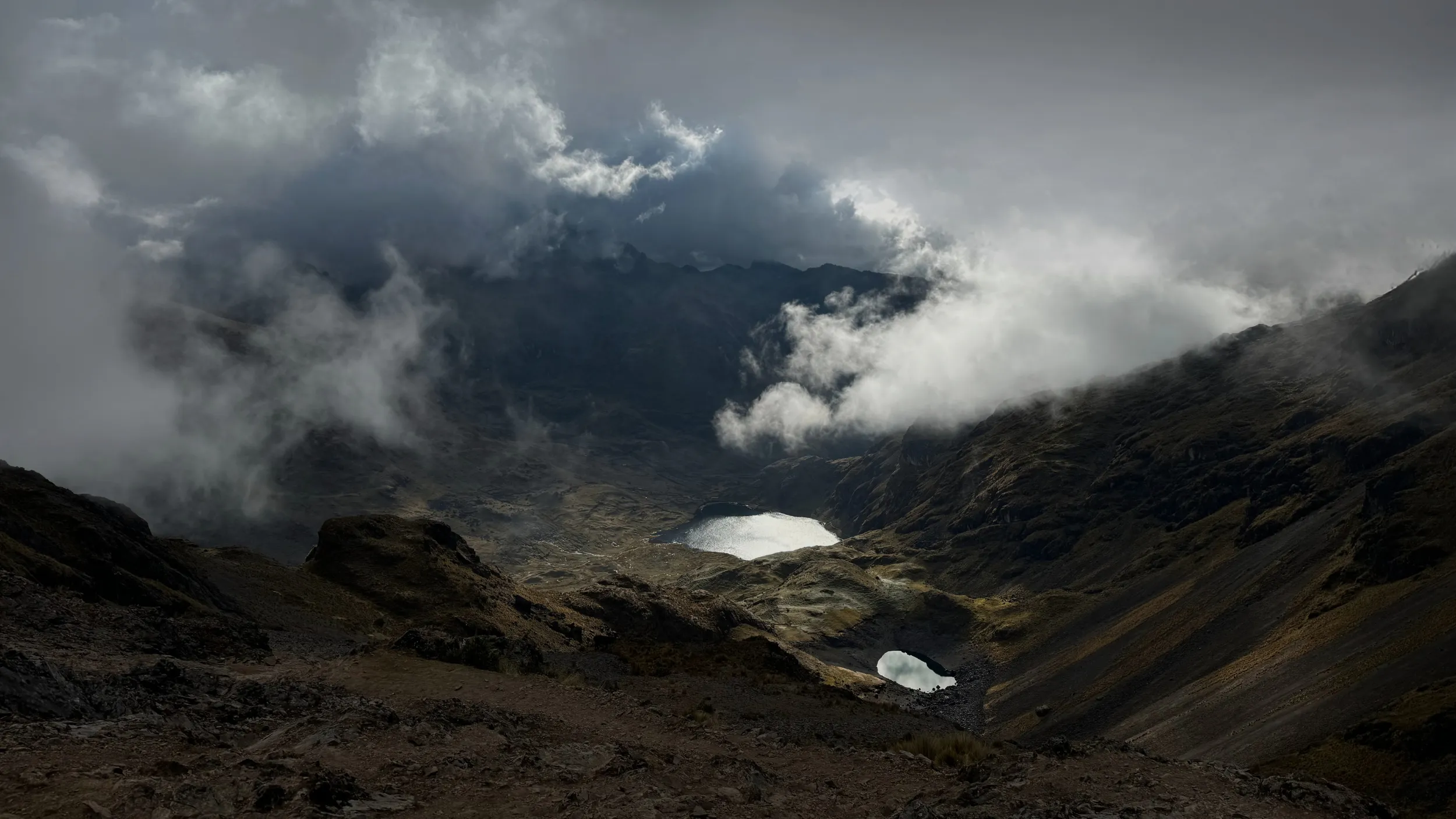
After lunch and a short rest, the afternoon continues with an ascent toward Humantay Lagoon. The path climbs steadily, gaining altitude until the lake appears below the glacier. Wind moves across the water, and the surrounding peaks remain exposed. Time is taken here before descending back to camp.

Dinner is shared as temperatures drop quickly after sunset.

Details
• Difficulty: Moderate
• Maximum altitude: 4220 m / 13,845 ft
• Walking time: 6 hrs
• Walking distance: 10 km / 6.2 mi
• Meals: breakfast, lunch, dinner
• Accommodation: Andean Expedition Camps
• Challacancha: 3800 m / 12,467 ft
• Soraypampa (camp): 3950 m / 12,959 ft
• Humantay Lagoon: 4220 m / 13,845 ft
• Arrival: approx. 5:00 pm
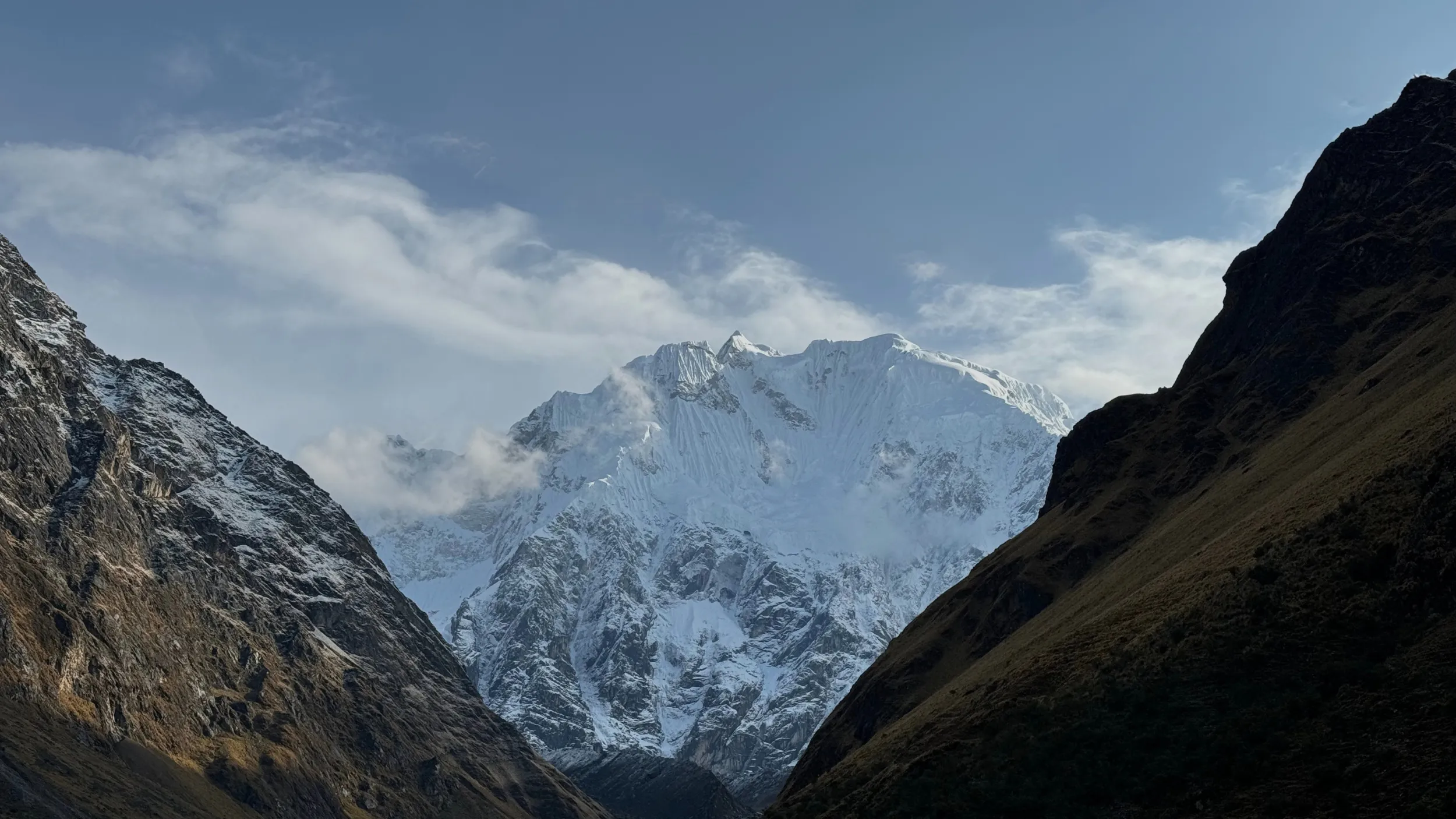
The morning begins before sunrise. Frost is often present at this altitude, and movement starts slowly as the body adjusts. The trail climbs toward Salkantaypampa, then continues toward a high glacial basin where Salkantay Lagoon rests beneath the mountain.

The ascent continues toward Inkachiriaska Pass, the highest point of the route. The terrain becomes rocky and exposed. Condors may appear along the ridgelines, and smaller animals such as vizcachas move between stone formations.

After crossing the pass, the descent begins. The environment shifts gradually—less exposed, with the first signs of vegetation returning along the slopes. Camp is set near Inca Canal, where water still moves through stone structures built to regulate flow. The night is clear, with minimal external presence.

Details
• Difficulty: Challenging
• Maximum altitude: 5100 m / 16,732 ft
• Walking time: 7–8 hrs
• Walking distance: 13 km / 8.0 mi
• Meals: breakfast, lunch, dinner
• Accommodation: Andean Expedition Camps
• Soraypampa: 3950 m / 12,959 ft
• Inkachiriaska Pass: 5100 m / 16,732 ft
• Inca Canal (camp): 3800 m / 12,467 ft
• Arrival: approx. 4:30 pm

Morning light reaches the valley later at this elevation. After breakfast, the trail follows the river downstream, entering a more protected environment. The air becomes warmer, and vegetation increases—muña, orchids, and low forest plants begin to appear.

The route passes Paucarcancha, where stone structures remain integrated into the slope. Movement continues toward Patallacta, where agricultural terraces extend along the hillside. Water channels are still visible, directing flow across the terrain.

Lunch is taken along the route, in open ground near the river. In the afternoon, the trail continues toward Piscacucho, where the river widens and the valley opens. Camp is set near a small local presence. The evening is quiet, often with a simple fire and shared meal.

Details
• Difficulty: Moderate
• Maximum altitude: 3800 m / 12,467 ft
• Walking time: 7 hrs
• Walking distance: 14 km / 8.6 mi
• Meals: breakfast, lunch, dinner
• Accommodation: Andean Expedition Camps
• Inca Canal: 3800 m / 12,467 ft
• Patallacta: 2700 m / 8,858 ft
• Piscacucho (camp): 2600 m / 8,530 ft
• Arrival: approx. 5:30 pm

The morning begins without urgency. After several days in the mountains, the pace adjusts. Transport follows the river toward Ollantaytambo, entering the Sacred Valley where agriculture becomes structured and visible—corn fields, terraces, and small communities working the land.

A shared meal is prepared with local products. Preparation is done together with the team, using traditional methods such as pachamanca, where food is cooked underground with heated stones. Chicha is prepared and shared in the same setting, without formality.

In the afternoon, there is time to walk through Ollantaytambo. The stone streets and water channels remain in use, and daily life continues around them. Later, the train follows the river toward Aguas Calientes. Arrival is in the evening.

Details
• Difficulty: Easy
• Maximum altitude: 2800 m / 9,186 ft
• Walking distance: 5 km/ walking in ollantaytambo town.
• Meals: breakfast, lunch, dinner
• Accommodation: Hotel
• Ollantaytambo: 2790 m / 9,153 ft
• Aguas Calientes: 2070 m / 6,791 ft
• Arrival: approx. 7:00 pm

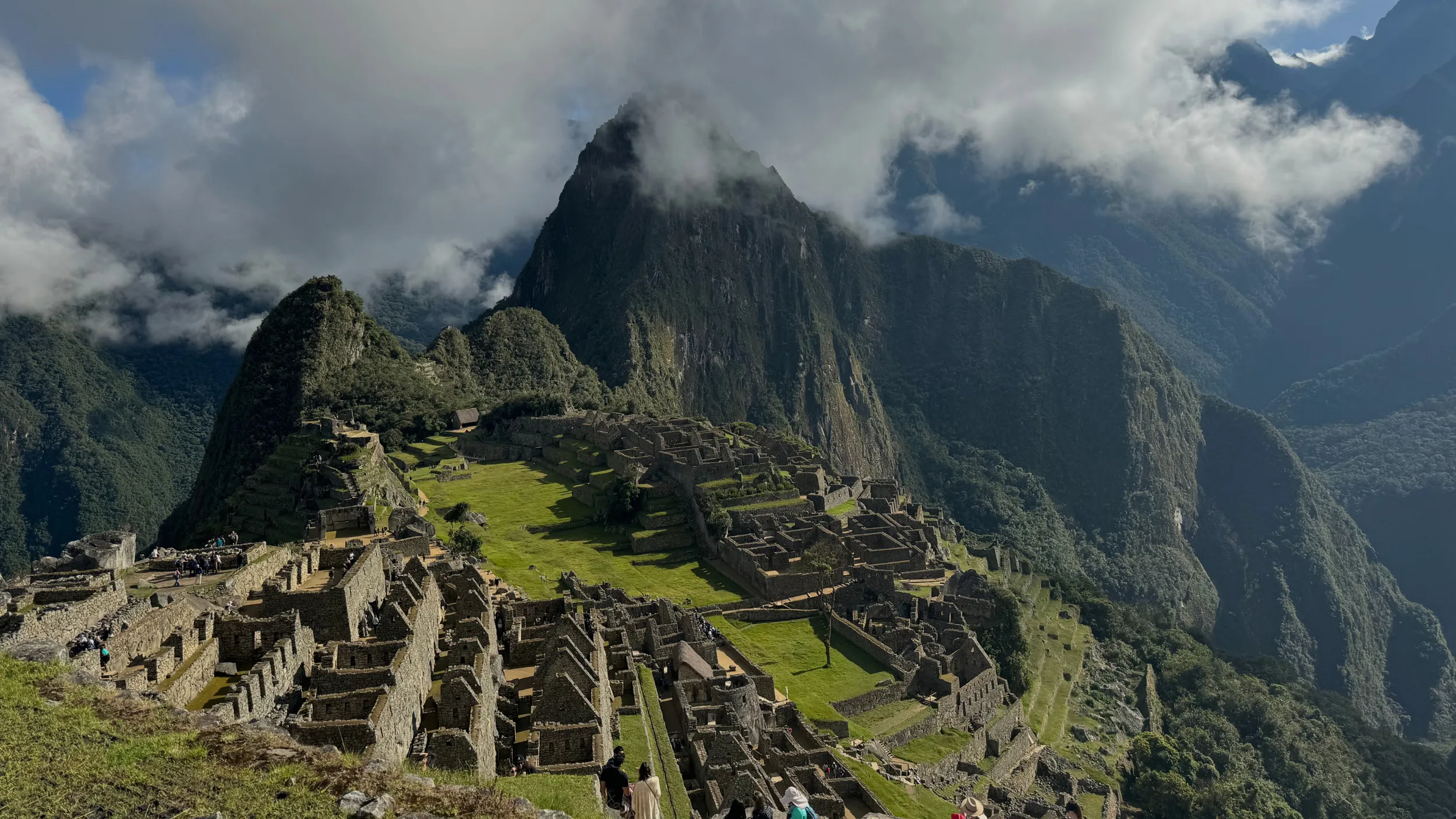
The final day begins early. The ascent to Machu Picchu is timed to enter before the main flow of visitors. The site reveals itself gradually as light reaches the terraces and surrounding peaks.

The guided visit moves through the main sectors, focusing on how the structures relate to the terrain—agriculture, water systems, and orientation. Afterward, time remains open to walk independently.

Return follows the same route down to Aguas Calientes. After lunch, the train moves back through the valley toward Ollantaytambo, where ground transport continues to Cusco. Arrival is in the early evening.

Details
• Difficulty: Moderate
• Maximum altitude: 2400 m / 7,874 ft
• Walking time: 5 hrs
• Walking distance: 8 km / 4.9 mi
• Meals: breakfast
• Machu Picchu: 2400 m / 7,874 ft
• Cusco: 3350 m / 10,990 ft
• Return: approx. 6:30 pm
• Total distance: 50 km / 31 mi

Logistics

  • Hotel pickup and drop-off in Cusco
  • Private transportation (Cusco → Challacancha / Ollantaytambo → Cusco)
  • Train ticket (Ollantaytambo → Aguas Calientes / return)
  • Bus ticket for ascent to Machu Picchu
  • Entrance ticket to Machu Picchu
  • Entrance ticket to Inca Trail section (Piscacucho – Ollantaytambo)
  • Duffle bag provided for personal gear during the trek
  • Pre-departure briefing with the expedition team

Professional Support Team

  • Local expedition guide with deep knowledge of the Salkantay region and Andean culture
  • Experienced trekking chefs and muleteers
  • Full camp setup and logistics handled throughout the route
  • All equipment carried in and out, maintaining a leave-no-trace approach
  • Communication system (walkie-talkies) along the trail

Experience

  • Fully guided trekking experience across all stages of the route
  • Guided visit at Machu Picchu
  • Interaction with local families and communities along the Sacred Valley
  • Pachamanca cooking experience and traditional chicha tasting in Ollantaytambo
  • Observation of high Andean wildlife (alpacas, condors, vizcachas when conditions allow)
  • Transition through ecosystems: high mountain, glacier zone, cloud forest, and valley
  • Wake-up tea each morning at camp
  • Afternoon tea with simple local snacks
  • Daily trail snacks

Accommodation

  • 3 nights in Andean Expedition Camps (fully temporary setup)
  • 1 night in hotel in Aguas Calientes
  • Camps installed and removed daily, with no permanent infrastructure

Food

  • 5 breakfasts (field and local settings)
  • 4 lunches prepared along the route
  • 4 dinners cooked fresh in camp
  • Meals adapted to dietary requirements when needed

Safety

  • First-aid kit carried by the guide at all times
  • Emergency oxygen available during the trek
  • Continuous monitoring of weather, terrain, and group condition

Added Value

  • Route designed to move through low-traffic areas of Salkantay and the Sacred Valley
  • Integration of archaeological sites beyond the main circuit (Inca Canal, Paucarcancha, Patallacta)
  • Camps placed according to terrain and conditions, not fixed infrastructure
  • Small group size for controlled pace and adaptation to altitude

Some elements remain flexible, allowing each traveler to adapt the journey according to personal needs and preferences.

Drinking Water

  • Water is not included
  • Available for purchase along certain points of the route, often from local families

Travel Insurance

  • Strongly recommended, especially for high-altitude trekking

Personal Expenses

  • Additional snacks, drinks, or local products along the route

Additional Snacks or Beverages

  • Any extra items outside the planned meals

Final Lunch in Aguas Calientes

  • Not included, allowing flexibility after the Machu Picchu visit

Optional Services

  • Horse support (if required for personal assistance)
  • Trekking poles (rental available)
  • Sleeping bag (rental available)
  • Single accommodation upgrade (private arrangements)
  • Additional Machu Picchu tickets (Huayna Picchu / Machu Picchu Mountain, subject to availability)

Tips for the Team

  • All team members receive fair and consistent payment
  • Tips are optional, but remain a direct way to recognize the work of guides, cooks, and muleteers

Trip Info

  • Andean Expedition Camps and Hotel
  • Cusco
  • Cusco
  • Fully guided trekking experience across all stages of the route
  • Hotel pickup and drop-off in Cusco
  • 5100 m / 16,732 ft
  • 5 breakfasts, 4 lunches, 4 dinners

What to Bring

Essentials

  • Passport (student ID if applicable)
  • Cash in Peruvian soles
  • Personal medication

Clothing (Layer System)

  • Waterproof jacket
  • Warm jacket (essential for high-altitude nights)
  • Mid-layer (fleece or insulated layer)
  • Trekking pants
  • Thermal base layer

Footwear

  • Hiking boots, well broken-in and suitable for uneven terrain

Protection

  • Hat and gloves
  • Sunglasses
  • Sunscreen and lip balm

Personal Gear

  • Daypack (20–30L)
  • Water (minimum 2 liters recommended)
  • Headlamp or flashlight
  • Camera or phone

Optional

  • Trekking poles
  • Rain poncho
  • Personal snacks
  • Power bank

Request Your Date & Join a Group

To ensure the best experience and keep our trips personal, you can submit a non-binding request for your preferred date here. As soon as enough travelers join, we will confirm your trip and get everything ready for your adventure.


Related trips you might interested in

1

Food Experience

Meals are prepared in the field using ingredients sourced from the Sacred Valley and surrounding Andean regions. Cooking adapts to altitude and terrain, following a practical approach rather than a fixed menu.
Dishes are warm, consistent, and designed to sustain movement across changing environments. Preparation happens within a dedicated kitchen tent, while meals are shared in open space, maintaining a direct connection between team, landscape, and daily rhythm.

2

Safety Approach

Preparation begins before departure with a clear briefing, where the route, terrain, and expectations are explained in detail.

During the trek, guides continuously read the environment—glacier exposure near Salkantay, humidity changes toward the valley, and physical response to altitude. Decisions are made in real time, adjusting pace and timing according to conditions rather than fixed schedules.

3

Philosophy

There is no imposed pace. Movement follows the terrain.

From the high slopes of Salkantay to the lower valleys toward Ollantaytambo, the route is crossed without altering it. Camps remain temporary, placed where the land allows, then removed without trace.

The journey is shaped by distance, changing ecosystems, and the presence of those who still live along the route. What remains is not only the path taken, but the way it was walked—quietly, with awareness, and without interruption to the natural rhythm of the Andes.