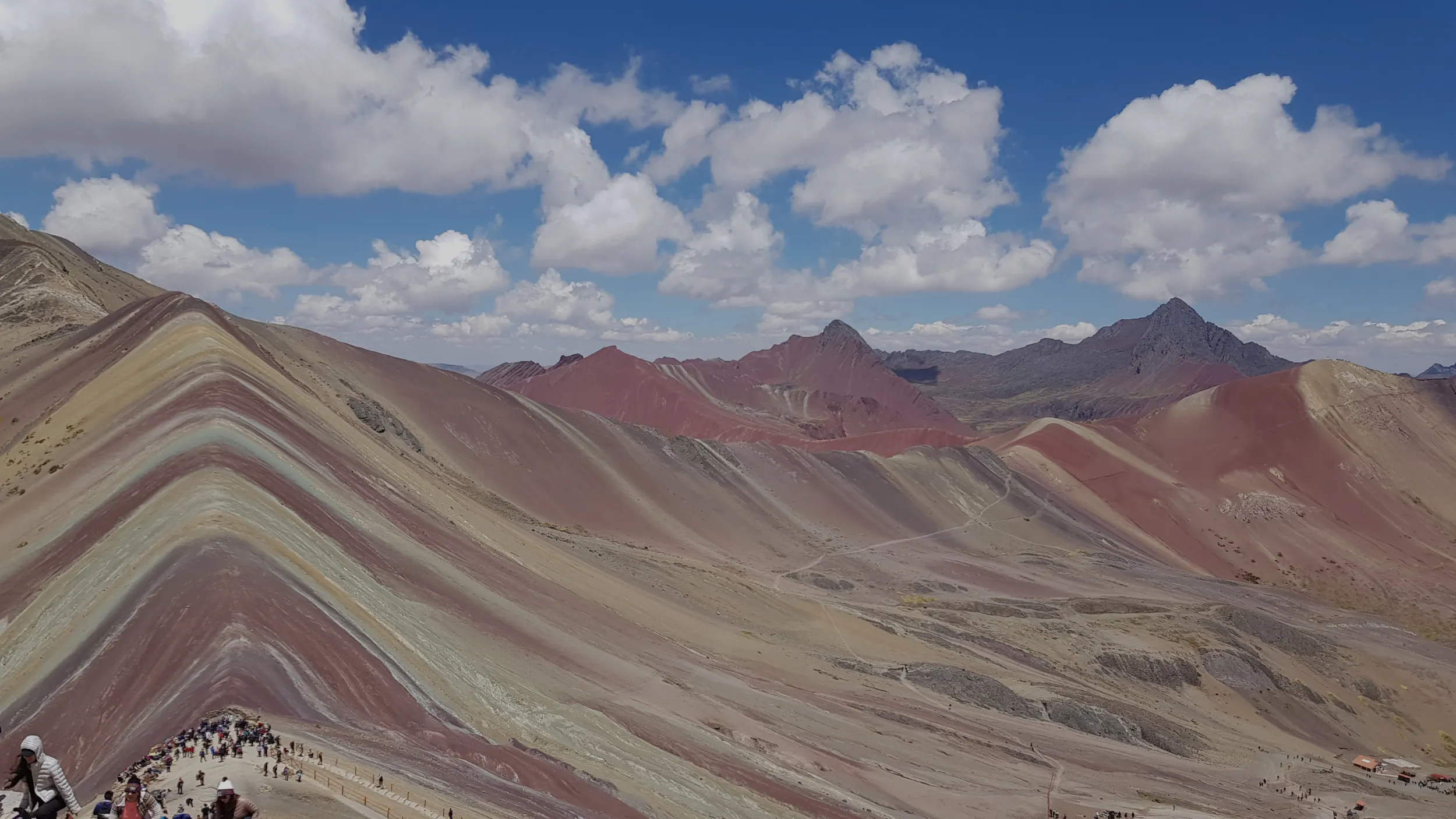
Lares Trek - Pachamama Expeditions Travel Skip to main content

Pachamama Expeditions Travel

Living Highlands – Remote Valleys – Inca Passage

Lares Trek

The Lares route moves across inhabited highlands where life continues through seasonal cycles, livestock, and long-standing connections between valleys. The journey begins in remote Andean territory, crossing open landscapes before descending toward the Sacred Valley and linking with the original Inca network that leads to Machu Picchu.

5 Days 4 Nights

Trip Highlights

  • Guided visit to Machu Picchu
  • Guided hike along the Short Inca Trail (KM 104 to Sun Gate)
  • Entrance ticket to Lares hot springs

Ready to explore? Simply send us your preferred date

Lares Trek

This is not a designed route. The experience unfolds through continuity—walking within an active landscape where camps are set in open terrain and daily life remains uninterrupted. As the days progress, the environment shifts naturally, from exposed high-altitude silence to greener valleys and warmer air.

The journey is understood through presence—by moving with the land rather than following a fixed structure.

No rush. No excess. No unnecessary intervention.

We move through the Andes by adjusting to the land, not reshaping it.

Itinerary

Departure begins early from Cusco, descending into the Sacred Valley before continuing toward Calca. The terrain opens briefly, then rises again as the road enters the Lares Valley, following the river into higher ground.
In Lares, time is taken at the hot springs—not as a pause, but as a way to prepare the body before walking.
The trail begins with a steady ascent toward Cuncani. The landscape remains open, with llamas and alpacas grazing freely across the slopes. Paths are shared with local families, where daily routines unfold without separation from the route. Native plants appear along the way, still used for food and traditional remedies.
Lunch is taken along the trail. In the afternoon, the route continues upward toward Quishuarani, where camp is set in exposed highland terrain. The day closes early, shaped by altitude, cold air, and distance.

Details
• Difficulty: Moderate
• Maximum altitude: 4,400 m / 14,435 ft
• Walking time: 6 hrs
• Walking distance: 12 km / 7.4 mi
• Accommodation: Andean Expedition Camp
• Lares (trailhead): 3,300 m / 10,826 ft
• Quishuarani (campsite): 3,850 m / 12,631 ft
• Kilkikasa Pass: 4,400 m / 14,435 ft
• Arrival at camp: approx. 4:00 pm
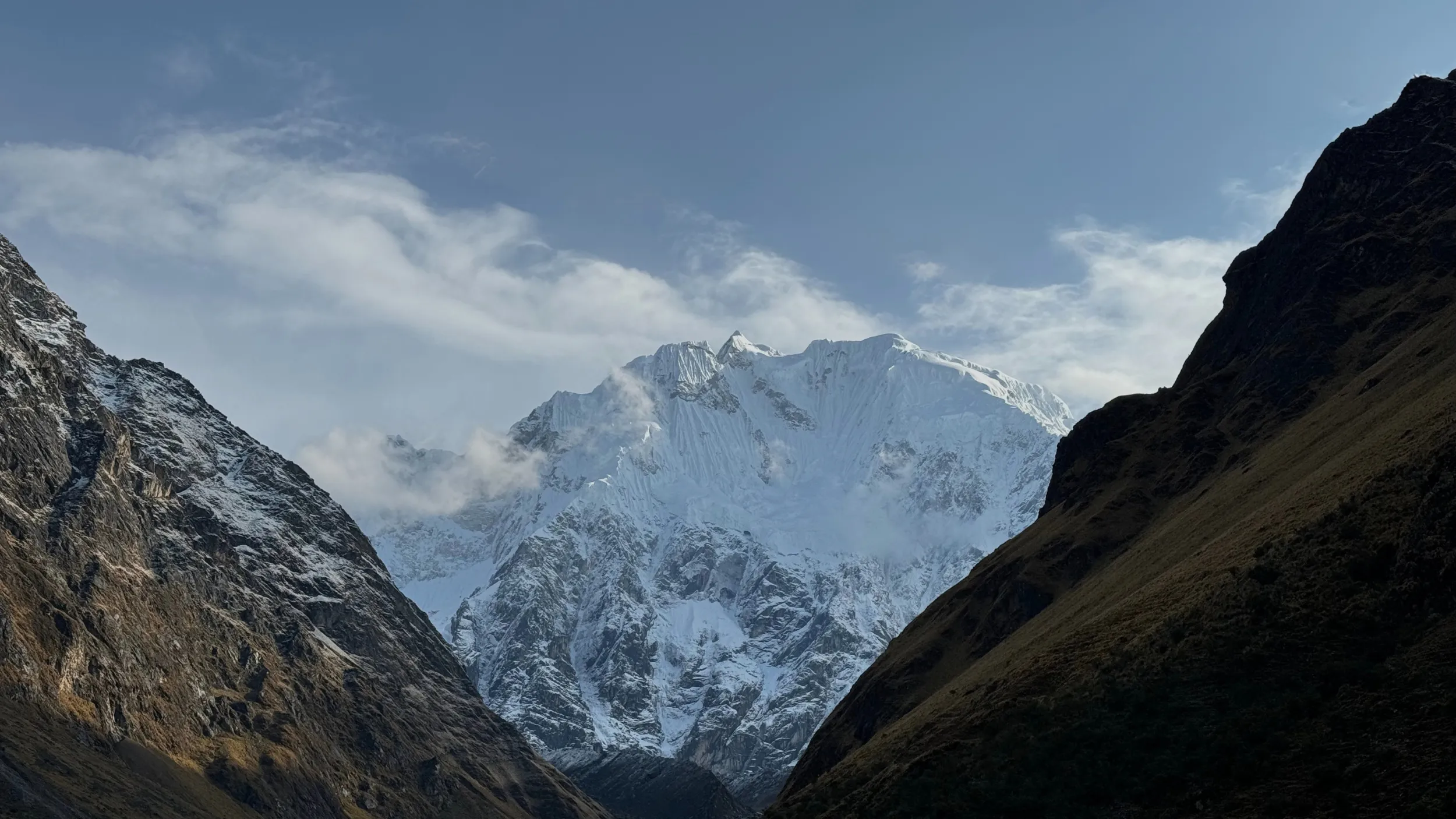
Morning begins without fixed timing. Light reaches the valley gradually, and the trail follows a steady ascent toward Qoyalay Lake. Water from higher ground crosses the path through small streams and falls.
As elevation increases, the terrain opens and becomes more exposed. The climb toward the pass is continuous, approached at an individual rhythm. Llamas and alpacas remain present, often accompanied by herders moving between seasonal grazing areas.
At Pachacutec Pass, the highest point, the crossing marks a shift rather than a destination.
The descent into Cancha Cancha is long and quiet. The valley becomes more sheltered, with scattered homes appearing gradually. Camp is set near the community, where interaction happens through proximity, not arrangement. The evening remains calm.

Details
• Difficulty: Challenging
• Maximum altitude: 4,700 m / 15,420 ft
• Walking time: 7 hrs
• Walking distance: 14 km / 8.6 mi
• Accommodation: Andean Expedition Camp
• Quishuarani (trailhead): 3,850 m / 12,631 ft
• Cancha Cancha (campsite): 3,950 m / 12,959 ft
• Pachacutec Pass: 4,400 m / 14,435 ft
• Arrival at camp: approx. 4:00 pm
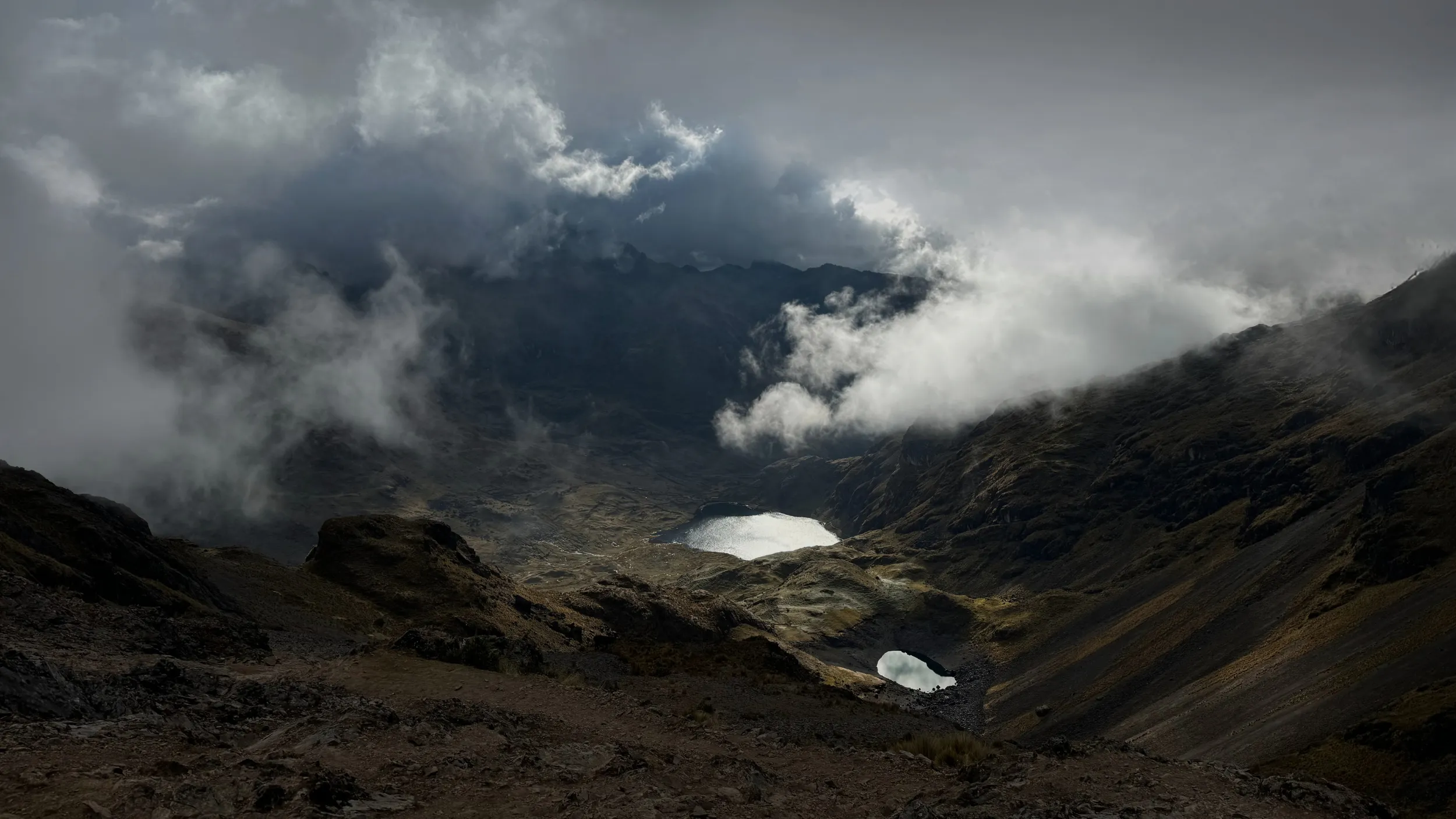
The trail descends through a valley where vegetation becomes more diverse. Open highlands give way to areas where native trees such as queuñas and molle begin to appear.
The path follows the course of water, guiding the descent toward Huarán. As altitude drops, the rhythm becomes more fluid, allowing longer stretches of walking.
Arrival in Huarán marks the end of the trekking section. Lunch is shared outdoors with the team before leaving the trail behind.
From here, transport continues to Ollantaytambo. The town retains its original structure, where streets and water channels still follow Inca design. The afternoon remains open, allowing time to move without direction. The night is spent in a local hotel.

Details
• Difficulty: Moderate
• Maximum altitude: 3,950 m / 12,959 ft
• Walking time: 5 hrs
• Walking distance: 11 km
• Accommodation: Hotel
• Cancha Cancha (trailhead): 3,800 m / 12,467 ft
• Huarán (lunch): 3,000 m / 9,842 ft
• Ollantaytambo: 2,790 m / 9,153 ft
• Arrival: approx. 5:00 pm

The morning follows the river from Ollantaytambo as the landscape shifts once more. Vegetation thickens, and the air becomes warmer as the train moves deeper into the valley.
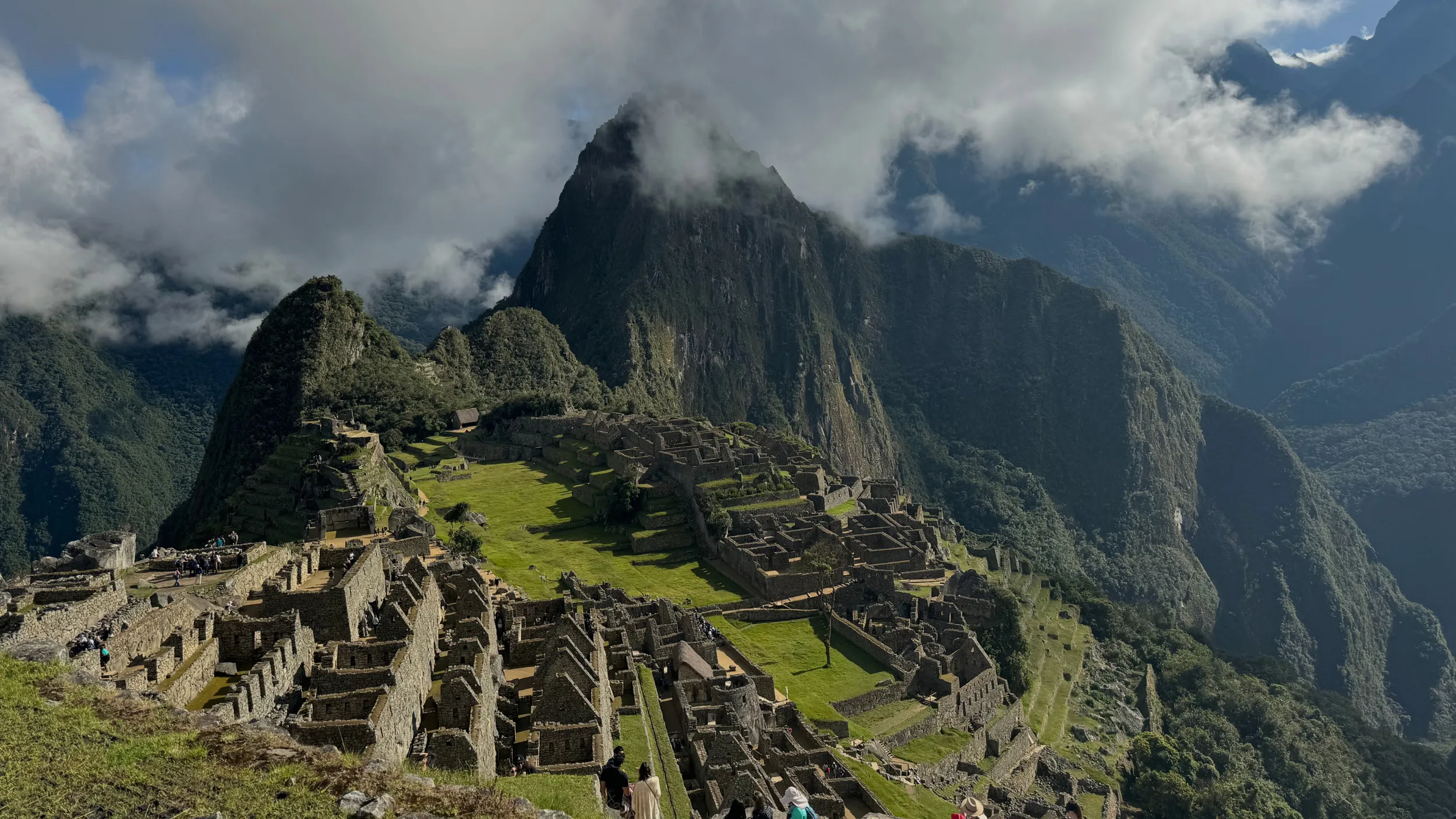
At KM 104, the trail resumes. This section of the Inca Trail feels enclosed, with stone paths partially reclaimed by vegetation. The ascent is steady, passing through sites such as Wiñay Wayna, where terraces and structures remain embedded in the terrain.
The final stretch leads to Inti Punku. Machu Picchu appears gradually, framed by late afternoon light. The moment is brief—an introduction rather than an arrival.
The descent continues toward Aguas Calientes, where the group settles for the night. A short briefing prepares the following day.

Details
• Difficulty: Challenging
• Maximum altitude: 2,720 m / 8,923 ft
• Walking time: 6 hrs
• Walking distance: 12 km / 7.4 mi
• Accommodation: Hotel
• Chachabamba (trailhead): 2,000 m / 6,561 ft
• Inti Punku (Sun Gate): 2,720 m / 8,923 ft
• Aguas Calientes: 2,070 m / 6,791 ft
• Arrival at camp: approx. 5:00 pm

The day begins early, returning to Machu Picchu before the main flow of visitors. Light reveals the site gradually, in relation to the surrounding mountains.
The guided visit focuses on connections—between structures, water, and terrain—rather than isolated facts.
Afterward, time remains open to explore independently, allowing each person to move at their own pace.
The return follows the same route to Aguas Calientes. From there, the train traces the river back to Ollantaytambo, reconnecting with the road toward Cusco. Arrival is in the early evening, closing the journey without ceremony.

Details
• Difficulty: Moderate
• Maximum altitude: 2,400 m / 7,874 ft
• Walking time: 5 hrs
• Walking distance: 8 km / 4.9 mi
• Aguas Calientes: 2,070 m / 6,791 ft
• Machu Picchu: 2,400 m / 7,874 ft
• Cusco (final): 3,350 m / 10,990 ft
• Total distance: 63 km / 39.1 mi
• Return time (Cusco): approx. 6:30 pm

Logistics

  • Hotel pickup and drop-off in Cusco
  • Private transportation connecting Cusco, Lares Valley, and Ollantaytambo
  • Tourist train ticket (Ollantaytambo → Aguas Calientes → Ollantaytambo)
  • Entrance ticket to Lares hot springs
  • One-way bus ticket from Machupicchu to Aguas Calientes (Day 4)
  • Duffle bag provided for personal gear during the trek
  • Pre-departure briefing with the guide team
  • Communication system along the route (radio coordination for safety and logistics)

Professional Support Team

  • Experienced trekking chefs, porters, and muleteers from Andean communities
  • Full expedition camp setup and logistics managed throughout the highland route
  • All equipment transported in and out following a strict leave-no-trace approach

Experience

  • Professional local guide with deep cultural and environmental knowledge
  • Fully guided trekking experience across the Lares route
  • Guided hike along the Short Inca Trail (KM 104 to Sun Gate)
  • Guided visit to Machu Picchu
  • Continuous immersion in living Andean communities
  • Wake-up tea each morning at camp
  • Afternoon tea or quiet rest moments with local snacks
  • Daily snacks provided during the hike

Accommodation

  • 2 nights in fully equipped Andean expedition camps
  • 1 night in a local hostel in Ollantaytambo
  • 1 night in a hotel in Aguas Calientes

Food

  • 4 breakfasts
  • 3 lunches prepared fresh along the trekking route
  • 3 dinners prepared by the trekking team in the mountains
  • 1 dinner in Aguas Calientes (Day 4)
  • Meals adapted to dietary requirements when needed

Safety

  • First-aid kit carried at all times by the guide
  • Emergency oxygen available throughout the trek
  • Ongoing monitoring of group condition and environmental factors

Added Value

  • Cultural and environmental interpretation integrated into each stage of the journey
  • Small groups, allowing a more personal and flexible pace
  • Temporary camps only — no fixed infrastructure in the landscape
  • Route design prioritizing low-traffic paths and quieter transitions through the Andes

Some elements remain open by design, allowing each traveler to move with autonomy and adjust the experience to personal needs along the way.

Drinking Water

  • Not included. Available for purchase at certain points along the route, often directly from local families

Travel Insurance

  • Strongly recommended, including coverage for trekking activities and travel interruptions

Personal Expenses

  • Additional snacks, beverages, or local products purchased during the journey

Additional Snacks or Beverages

  • Any extra items outside the planned meals

Final Lunch in Aguas Calientes

  • Not included, allowing flexibility to choose according to personal preference

Optional Services

  • Horse support (if required for personal assistance)
  • Trekking poles (rental available)
  • Sleeping bag (rental available)
  • Private accommodation upgrades
  • Additional entrance tickets (Huayna Picchu or Machu Picchu Mountain, subject to availability)

Tips for the Team

  • All team members receive fair and consistent payment
  • Tips are optional, but remain a direct way to recognize the work of guides, cooks, and muleteers

Trip Info

  • Andean Expedition Camps and Hotel
  • Cusco
  • Cusco
  • Professional local guide with deep cultural and environmental knowledge
  • Hotel pickup and drop-off in Cusco
  • 4,700 m / 15,420 ft
  • 4 breakfasts, 3 lunches, 3 dinners

What to Bring

Preparing for the Lares and Inca Trail route is not about carrying more, but about carrying with clarity. The journey moves through distinct environments — from exposed highlands to warmer, more humid valleys — requiring adaptability rather than excess.

Essentials

  • Passport (required for Machu Picchu entry)
  • Student ID (if applicable)
  • Cash in Peruvian soles for small purchases

Clothing (Layer System)

  • Waterproof jacket for rain and wind exposure
  • Warm jacket for cold mornings and evenings at altitude
  • Mid-layer (fleece or similar) for adaptable insulation
  • Trekking pants suitable for long days of movement
  • Thermal base layer for colder sections

Footwear

  • Hiking boots, well broken-in and suitable for uneven terrain

Protection

  • Hat and gloves for high-altitude conditions
  • Sunglasses for strong mountain light
  • Sunscreen and lip balm
  • Insect repellent (especially useful in lower, warmer zones)

Personal Gear

  • Daypack (20–30L)
  • Water (minimum 2 liters recommended)
  • Camera or phone

Optional

  • Trekking poles
  • Rain poncho
  • Personal snacks
  • Power bank

Request Your Date & Join a Group

To ensure the best experience and keep our trips personal, you can submit a non-binding request for your preferred date here. As soon as enough travelers join, we will confirm your trip and get everything ready for your adventure.


Related trips you might interested in

1

Food Experience

Meals in the mountains are part of the care behind the journey.
We work with fresh ingredients sourced from the Sacred Valley and nearby Andean regions, prepared daily by a team that understands the demands of cooking in remote environments.

Each meal is designed to sustain the body while maintaining a connection to place — combining traditional Peruvian preparations with simple, well-balanced dishes adapted to the conditions of the trail.

2

Safety Approach

Safety is built through preparation, awareness, and experience.
Before departure, a detailed briefing allows space to understand the route and align expectations.

During the trek, guides continuously evaluate weather, terrain, and group condition. Decisions are made in real time, prioritizing safety and adaptability rather than fixed schedules.

3

Philosophy

This approach values silence, space, and respect — for the environment and for the communities that live within it.

What remains is simple:
to walk, to observe, and to leave without altering what was there before.