Inti Punku (Sun Gate) Trek To Machu Picchu - Pachamama Expeditions Travel Skip to main content

Pachamama Expeditions Travel

Silent Paths – Living Memory – Mountain Ritual

Inti Punku (Sun Gate) Trek To Machu Picchu

This route moves away from the conventional paths and enters a quieter section of the Andes, where movement is defined by terrain rather than expectation. The trail connects a sequence of lesser-visited sites—Ñaupa Iglesia, Perolniyoc, Raqaypata—before reaching Inti Punku, a high-altitude sun gate facing the glacier of Verónica (Wakaywillka).

4 Days 3 Nights

Trip Highlights

  • Guided visits at Ñaupa Iglesia, Raqaypata, Inti Punku, and Machu Picchu
  • Continuous movement through low-traffic, less frequented Andean paths
  • Daily interaction with the trekking team through shared meals and camp routines

Ready to explore? Simply send us your preferred date

Inti Punku (Sun Gate) Trek To Machu Picchu

From this point, the landscape opens wide. Inti Punku was not a passage, but a place of observation and ceremony, aligned with the surrounding mountains (apus). What remains is not only structure, but orientation—toward the peaks, the light, and the cycles that shaped Andean life.

This journey is designed for travelers who are comfortable with sustained hiking and altitude, and who value space, silence, and a slower understanding of the land. Machu Picchu is reached at the end, but it is not the beginning of the experience—it is the final point in a longer passage.

We move with the mountain, not against it.

Routes are selected to avoid high-traffic areas, maintaining space and continuity. Camps remain temporary. Nothing is modified or built into the landscape.

Itinerary

Departure begins at 5:00 am from Cusco, moving toward the Sacred Valley while the light builds slowly over the mountains. After a short drive, the route reaches Ñaupa Iglesia, a carved stone site set into the rock face. The visit is quiet, with time to walk through the space and understand its placement within the landscape.

From here, the trail begins gradually. The path ascends through dry valley terrain, with scattered vegetation and open views. By late morning, the sound of water becomes constant as the route approaches Perolniyoc waterfall. Lunch is prepared in an open area below, shared with the team.

In the afternoon, the trail continues upward along an old stone path toward Raqaypata. The site sits above the valley, with terraces and structures still connected to the slope. There is time to walk through before continuing toward Rayan, where camp is set near local farmland. Evening settles with tea and a simple meal as temperatures drop.

Details
• Difficulty: Moderate
• Maximum altitude: 3600 m / 11,811 ft
• Walking time: 7 hrs
• Walking distance: 11 km / 6.8 mi
• Accommodation: Andean Expedition Camps
• Ñaupa Iglesia: 2850 m / 9,350 ft
• Perolniyoc: 3300 m / 10,826 ft
• Rayan (camp): 3600 m / 11,811 ft
• Arrival: approx. 5:00 pm
Morning begins early with warm tea before sunrise. The trail climbs steadily toward Pucaqasa Pass, gaining elevation across open slopes. Vegetation becomes sparse, and the air turns colder. Movement slows naturally as altitude increases.

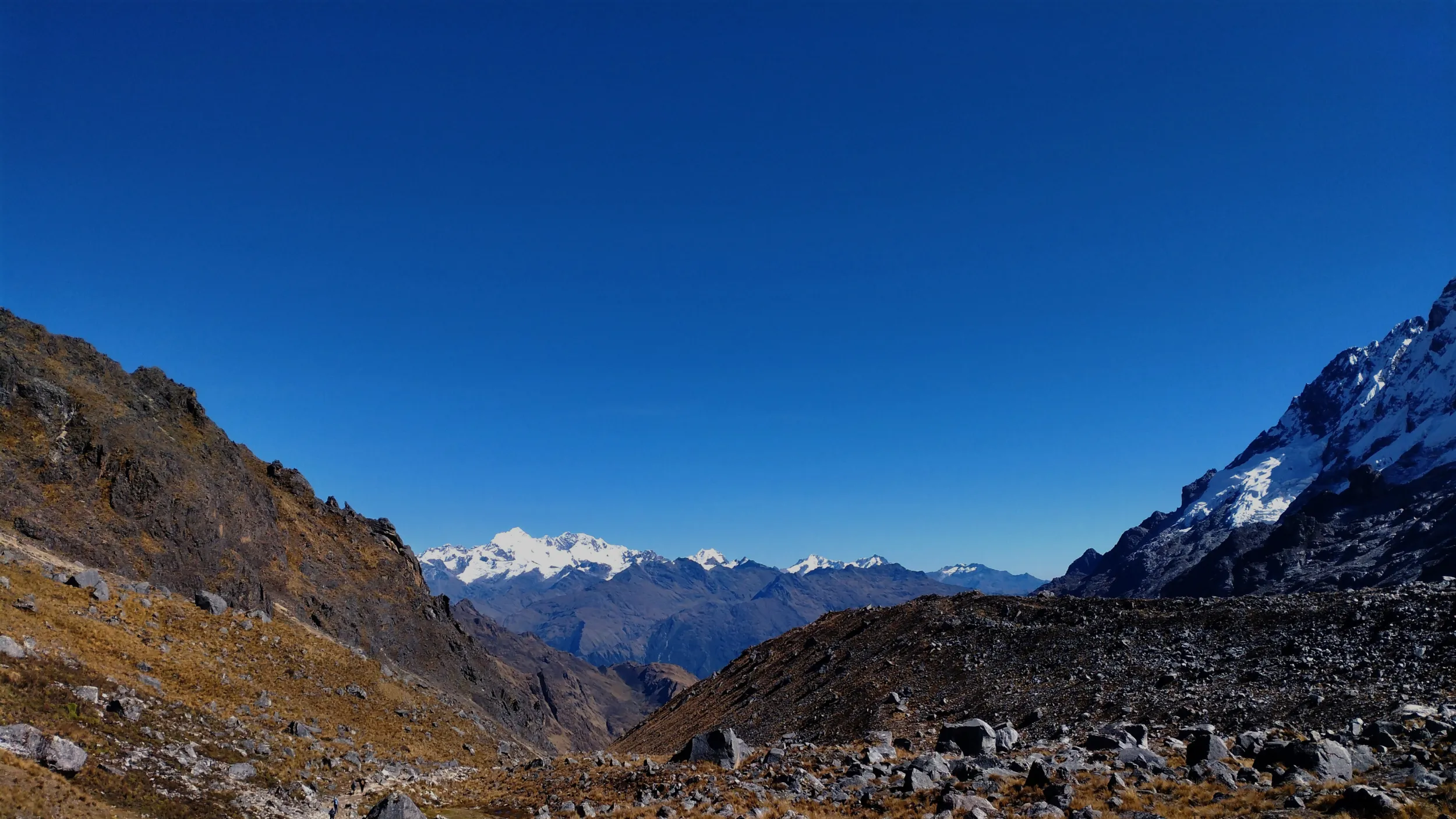
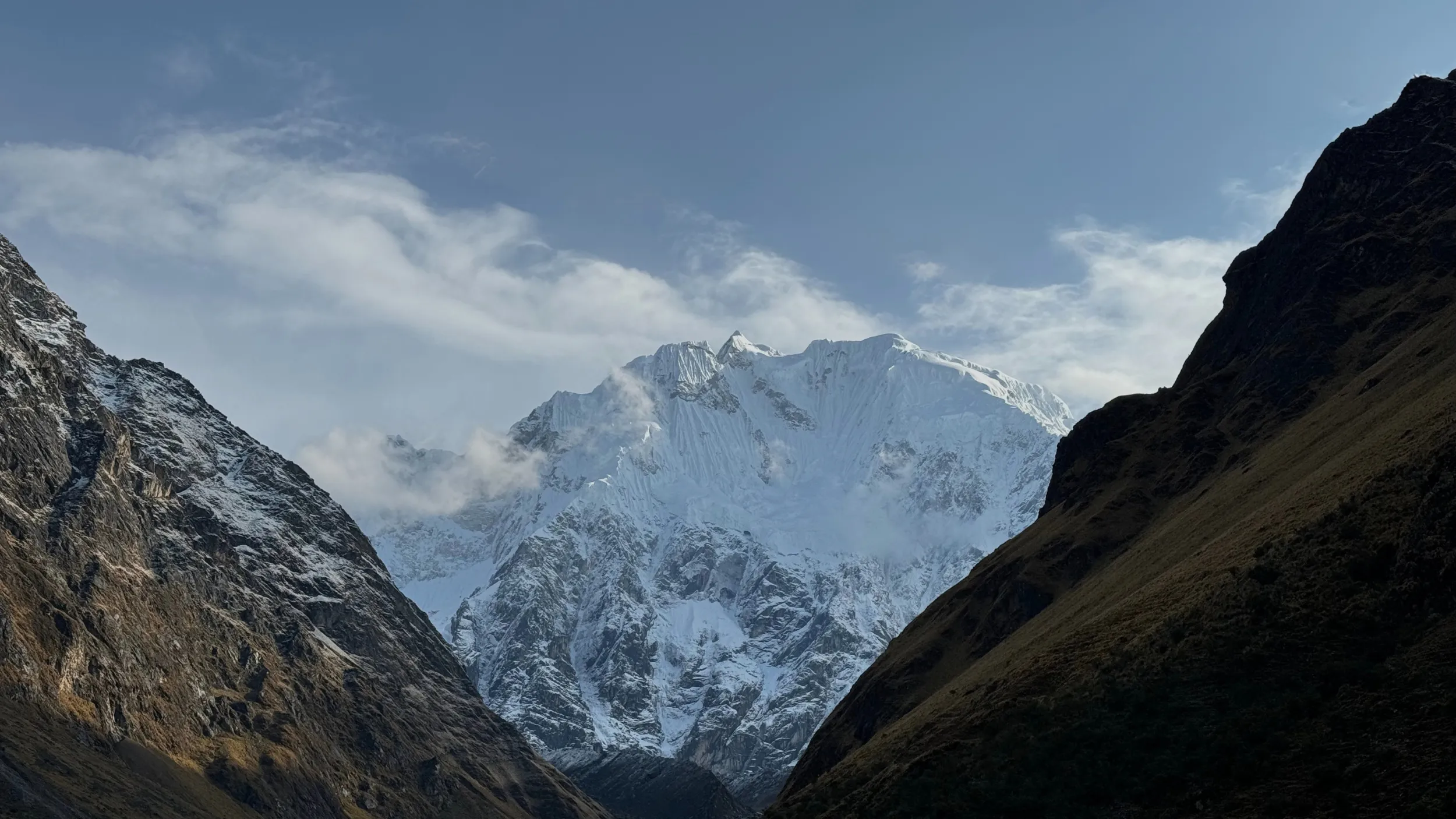
At higher sections, wildlife appears depending on conditions—vicuñas moving across distance, Andean geese near water sources. The first full views of Wakaywillka (Verónica) emerge, marking the scale of the range.

From the pass, the route traverses toward Inti Punku. The approach is gradual, and the structure appears late, positioned directly facing the glacier. This was a ceremonial observation point rather than an entrance—aligned with seasonal light and mountain presence. Time is taken here without rush.

Lunch is shared nearby before descending toward Choquetacarpo. Camp is set in open terrain, exposed to wind but stable. The evening remains quiet, with long views across the valley.

Details
• Difficulty: Challenging
• Maximum altitude: 4350 m / 14,272 ft
• Walking time: 7 hrs
• Walking distance: 13 km / 8.0 mi
• Accommodation: Andean Expedition Camps
• Rayan: 3600 m / 11,811 ft
• Inti Punku: 3900 m / 12,795 ft
• Choquetacarpo (camp): 4350 m / 14,272 ft
• Arrival: approx. 4:00 pm

The day begins before sunrise with a short return toward Inti Punku. Light reaches the glacier gradually, revealing the alignment between the structure and the surrounding peaks. There is no defined activity here—only time to observe.

Afterward, the trail descends toward Cachiqata. The terrain shifts from high-altitude exposure to more sheltered valley conditions. Along the way, Inca quarries appear—large cut stones left in place, marking the origin of construction materials used in Ollantaytambo.

By midday, arrival to Cachiqata allows a pause. Interaction with local families happens naturally, often around simple exchanges—food, conversation, or observation of daily routines.

The route continues by vehicle to Ollantaytambo. Lunch is taken in town, followed by time to walk through its streets, where original stone layouts remain in use. In the evening, the train follows the river toward Aguas Calientes. Arrival is quiet, with dinner and rest in preparation for the next day.

Details
• Difficulty: Moderate
• Maximum altitude: 3900 m / 12,795 ft
• Walking time: 6–7 hrs
• Walking distance: 12 km / 7.4 mi
• Accommodation: Hotel
• Choquetacarpo: 4350 m / 14,272 ft
• Cachiqata: 2900 m / 9,514 ft
• Aguas Calientes: 2070 m / 6,791 ft
• Arrival: approx. 6:00 pm

Departure begins early, around 5:00 am. The ascent to Machu Picchu is timed to enter before the main flow of visitors. Morning light reveals the site gradually, with surrounding peaks emerging through shifting clouds.

The guided visit moves through key sectors, focusing on how the site relates to the terrain—water channels, agricultural terraces, and structural orientation. After the guided portion, there is time to walk independently.

Return follows the same route down to Aguas Calientes. Lunch remains open, allowing flexibility. In the afternoon, the train follows the Urubamba River back toward Ollantaytambo, where ground transport continues to Cusco. Arrival is in the early evening.

Details
• Difficulty: Moderate
• Maximum altitude: 2400 m / 7,874 ft
• Walking time: 5 hrs
• Walking distance: 8 km / 4.9 mi
• Machu Picchu: 2400 m / 7,874 ft
• Cusco: 3350 m / 10,990 ft
• Return: approx. 6:30 pm
• Total distance: 45 km / 27.9 mi

Logistics

  • Hotel pickup and drop-off in Cusco
  • Private transportation adapted to the route (Cusco → trailhead / return from Ollantaytambo → Cusco)
  • Train ticket (Ollantaytambo → Aguas Calientes / return)
  • One-way bus ticket for ascent to Machu Picchu
  • Entrance ticket to Machu Picchu
  • Entrance fees to all archaeological sites along the route
  • Duffle bag provided for personal gear carried by the team during the trek
  • Pre-departure briefing with the guide team
  • Communication system (radio/walkie-talkies) along the trail

Professional Support Team

  • Local expedition guide with deep knowledge of terrain, culture, and route logic
  • Trekking chefs and support team managing all camp logistics
  • Muleteers and pack animals for equipment transport in remote sections
  • Full expedition setup handled throughout the journey
  • All equipment carried in and out, following a strict leave-no-trace approach

Experience

  • Fully guided trekking experience across all stages of the route
  • Guided visits at Ñaupa Iglesia, Raqaypata, Inti Punku, and Machu Picchu
  • Continuous movement through low-traffic, less frequented Andean paths
  • Daily interaction with the trekking team through shared meals and camp routines
  • Wake-up tea each morning at camp
  • Afternoon tea with simple local snacks
  • Daily trail snacks provided
  • Small group size for a controlled and adaptable pace

Accommodation

  • 2 nights in Andean Expedition Camps
  • Fully temporary camp setup in remote environments
  • High-quality mountain tents designed for wind, cold, and variable conditions
  • Sleeping system adapted to altitude and terrain
  • 1 night in hotel in Aguas Calientes

Food

  •  4 breakfasts (field and local settings)
  • 3 lunches prepared along the route
  • 3 dinners cooked fresh in remote camps
  • Meals adapted to dietary requirements when needed

Hydration

  • Boiled and filtered water provided in remote sections of the trek
  • In lower areas or local settlements, bottled water can be purchased directly from small family-run stores

Safety

  • First-aid kit carried by the guide at all times
  • Emergency oxygen available during the trek
  • Continuous assessment of weather, terrain, and group condition

Camping Equipment (Provided by Pachamama Expeditions)

  • High-mountain expedition tents (shared or private upon request)
  • Dining tent for meals and shelter
  • Kitchen tent for field cooking operations
  • Sleeping mattress (insulated for cold ground conditions)
  • All logistical equipment required for remote camps

Some elements remain intentionally flexible to allow personal adjustment during the journey.

Travel Insurance

  • Strongly recommended, especially for high-altitude trekking

Personal Expenses

  • Additional snacks, drinks, or local products along the route

Additional Snacks or Beverages

  • Any extra items outside the planned meals

Final Lunch in Aguas Calientes

  • Not included, allowing flexibility

Optional Services

  • Horse support (if required for personal assistance)
  • Trekking poles (rental available)
  • Sleeping bag (rental available)
  • Private tent setup (on request)
  • Additional Machu Picchu tickets (Huayna Picchu / Machu Picchu Mountain, subject to availability)

Tips for the Team

  • All team members receive fair and consistent payment
  • Tips are optional, but remain a direct way to recognize the work of guides, cooks, and muleteers

Trip Info

  • Andean Expedition Camps and Hotel
  • Cusco
  • Cusco
  • Local expedition guide with deep knowledge of terrain, culture, and route logic
  • Hotel pickup and drop-off in Cusco
  • 4350 m / 14,272 ft
  • 4 breakfasts, 3 lunches, 3 dinners

What to Bring

Preparation defines how the route is experienced. Conditions change across altitude, temperature, and terrain.

Essentials

  • Passport (student ID if applicable)
  • Cash in Peruvian soles for small purchases along the route
  • Personal medication

Clothing (Layer System)

  • Waterproof jacket (rain and wind protection)
  • Warm jacket (for cold mornings and evenings)
  • Mid-layer (fleece or insulated layer)
  • Trekking pants
  • Thermal base layers

Footwear

  • Hiking boots, well broken-in and suitable for uneven terrain

Protection

  • Hat and gloves
  • Sunglasses
  • Sunscreen and lip balm
  • Insect repellent (important in lower and humid sections)

Personal Gear

  • Daypack (20–30L)
  • Water (minimum 2 liters recommended)
  • Headlamp or flashlight
  • Camera or phone

Optional

  • Trekking poles
  • Rain poncho
  • Personal snacks
  • Power bank

Request Your Date & Join a Group

To ensure the best experience and keep our trips personal, you can submit a non-binding request for your preferred date here. As soon as enough travelers join, we will confirm your trip and get everything ready for your adventure.


Related trips you might interested in

1

Food Experience

Meals are prepared in the field using fresh, natural ingredients sourced from the Sacred Valley and nearby communities. There is no reliance on processed or fast food—everything is based on vegetables and locally sourced meats, adapted to the conditions of the trek. At this altitude, food supports movement and recovery, but it also reflects the environment: simple, warm, and aligned with the rhythm of the mountains.


2

Safety Approach

Preparation begins before departure with a detailed briefing, where participants can ask questions and understand route conditions, climate, and physical demands.

Guides continuously assess terrain, weather, and group condition. Decisions are made in real time—especially in canyon sections where heat and exposure vary significantly.

The route is managed through awareness, not rigid timing.


3

Philosophy

Local communities are approached with respect for their rhythm of life.
There is no staging, no interruption—only coexistence.

What defines the experience is not comfort or speed, but access:
distance walked, silence held, and connection built through presence.