Huchuy Qosqo Short Inca Trail - Pachamama Expeditions Travel Skip to main content

Pachamama Expeditions Travel

Highland Passage – Inca Continuity – Quiet Approach

Huchuy Qosqo Short Inca Trail

This route connects two distinct layers of the Andes: the highland plateaus above the Sacred Valley and the original Inca pathways leading toward Machu Picchu. The journey begins away from main roads, crossing open terrain shaped by herding routes and small communities, before gradually linking with the stonework of the Inca Trail.

4 Days 3 Nights

Trip Highlights

  • Two visits to Machu Picchu (arrival + guided second visit)
  • Continuous interaction with landscapes and local routes
  • Short Inca Trail (KM 104) to Machu Picchu

Ready to explore? Simply send us your preferred date

Huchuy Qosqo Short Inca Trail

Huchuy Qosqo appears first—set above the valley—before the path continues toward the forested sections that lead to Machu Picchu.

Movement is steady and deliberate, shaped by altitude, distance, and terrain transitions. Camps remain temporary, and meals are prepared in the field alongside the trekking team. This experience suits travelers who prefer a quieter approach—those willing to move through the landscape to understand it, rather than access it directly.

Movement follows the terrain. No fixed rhythm is imposed.

The route connects highlands, valleys, and forest without altering them. Camps remain temporary.

Itinerary

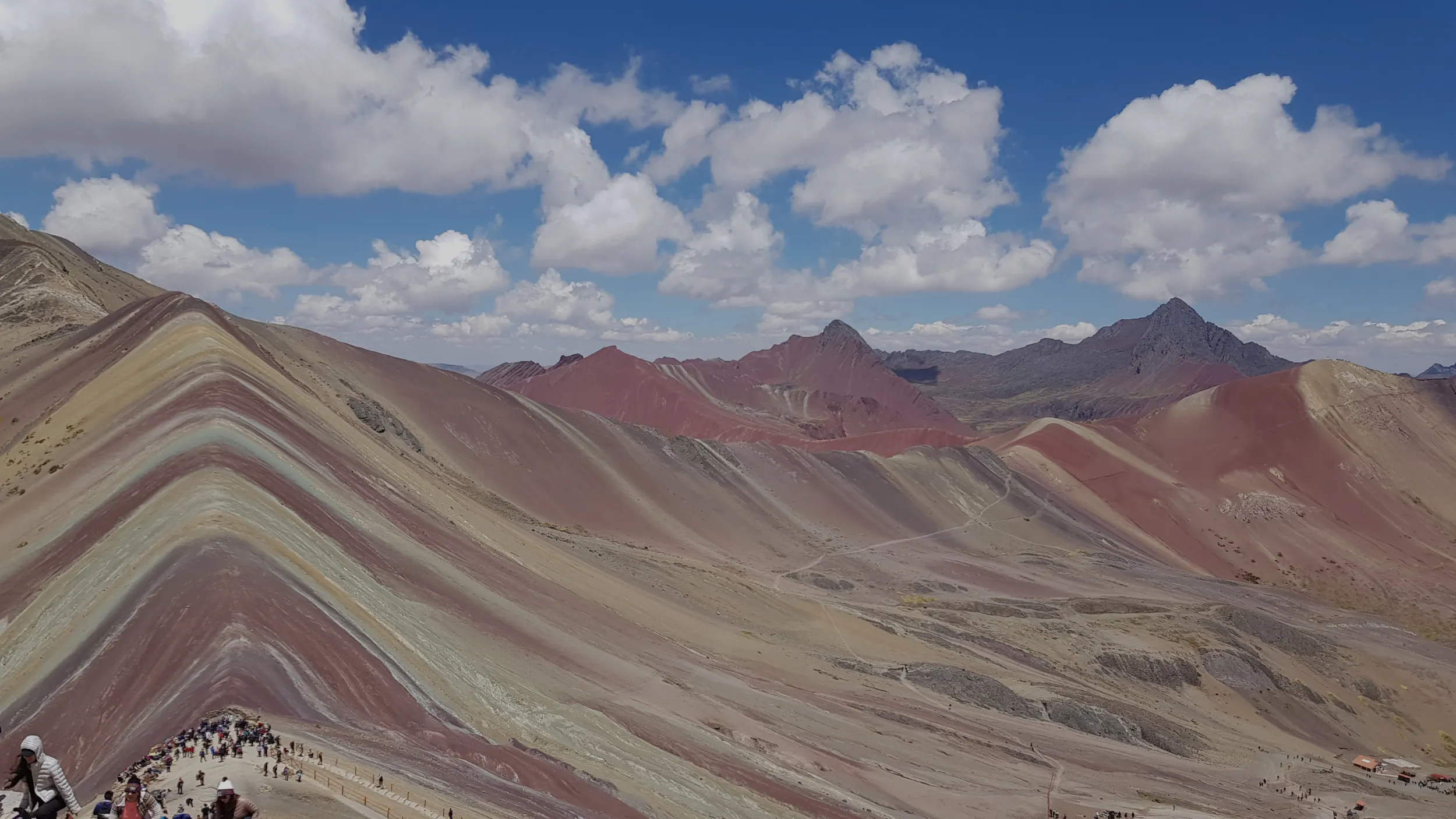
Departure begins early from Cusco, moving by road toward the highland community of Tauca. The transition is gradual—urban edges give way to open Andean terrain, where herding paths replace defined roads. The walk begins across wide plateaus, with steady movement over rolling ground.

As the route progresses, elevation is gained toward a high pass, where the first views open toward the Sacred Valley below. From here, the trail descends gradually toward Huchuy Qosqo, following a path that has connected these communities for generations.

Arrival at the site comes in the afternoon. The stone structures remain integrated into the hillside, overlooking the valley. Camp is set nearby in an open area, without altering the terrain. Dinner is prepared as light fades, with the valley below and the mountains holding the last warmth of the day.

Details
• Difficulty: Moderate
• Maximum altitude: 4200 m
• Walking time: 6–7 hrs
• Walking distance: 12 km
• Accommodation: Andean Expedition Camps
Morning begins at Huchuy Qosqo with a quiet exploration of the site. The structures reveal their function through position—storage areas, terraces, and open spaces aligned with the valley below. The visit remains unhurried, allowing time to move through the site before descending.

The trail drops steadily toward Lamay, where the environment shifts—warmer air, vegetation changing, and the presence of agriculture becoming more visible. From here, transport continues along the Sacred Valley toward Ollantaytambo and then to KM 104, where the Inca Trail section begins.

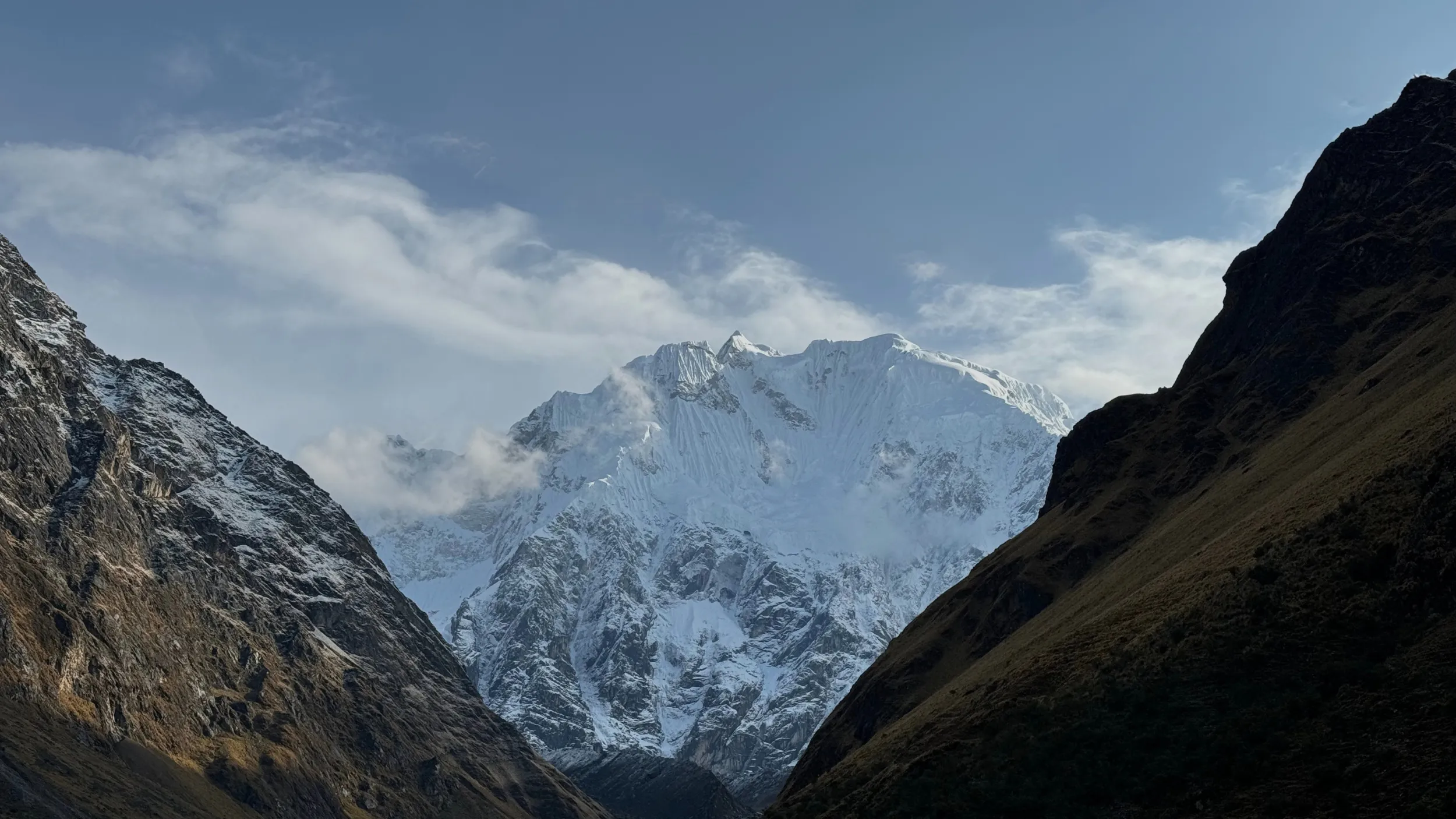
The walk follows original stone paths, gradually entering denser vegetation. The terrain transitions into cloud forest—more humid, enclosed, and alive with subtle movement. Arrival at Wiñay Wayna comes in the late afternoon. Camp is set nearby, maintaining minimal presence within the environment.

Details
• Difficulty: Moderate to Challenging
• Maximum altitude: 3600 m
• Walking time: 6–7 hrs (trekking sections)
• Walking distance: 10 km
• Accommodation: Andean Expedition Camps
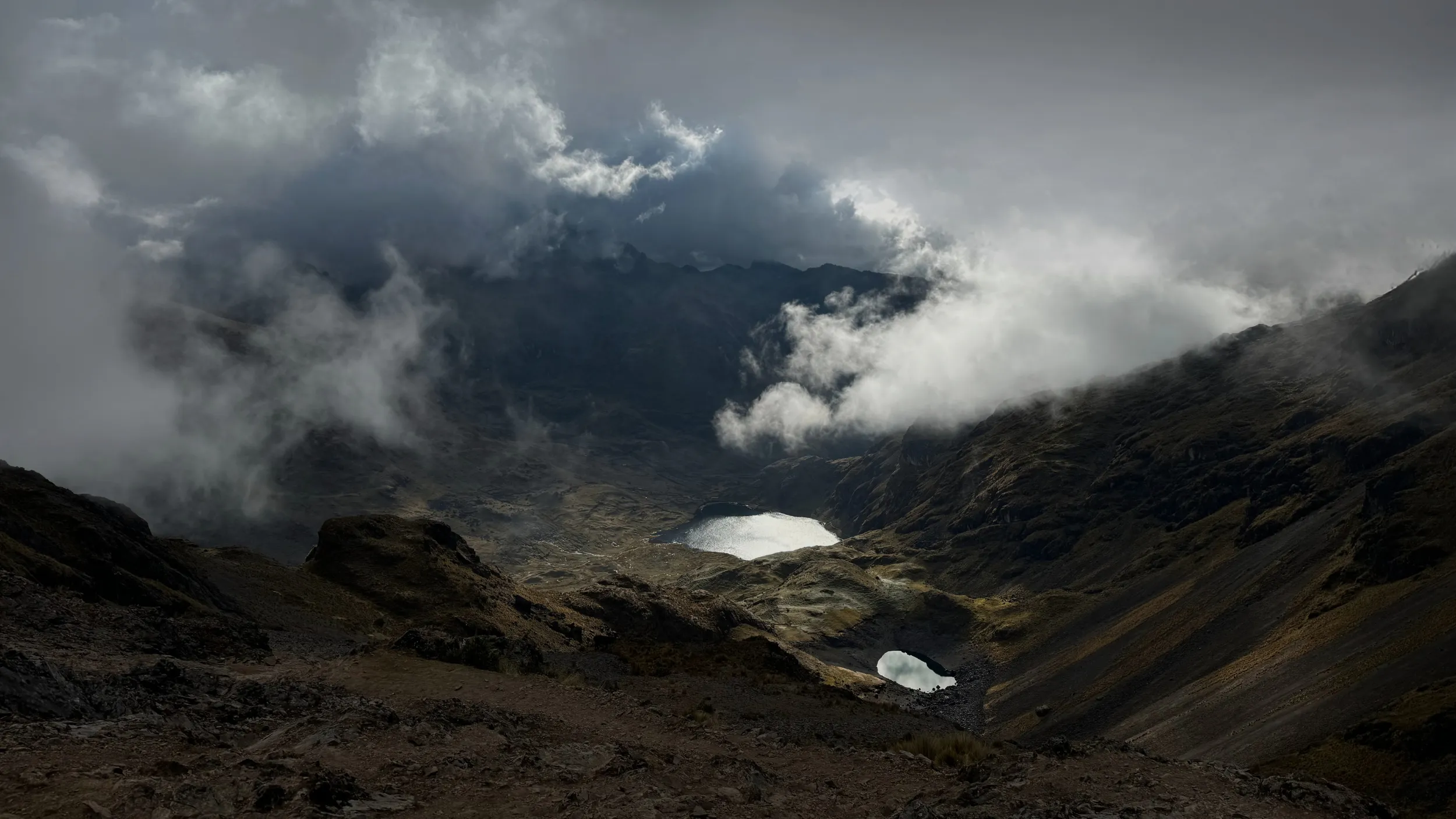
The day starts early, before the main flow of visitors reaches the trail. The path continues along the Inca Trail, moving through narrow passages and forested sections that gradually open toward higher viewpoints.

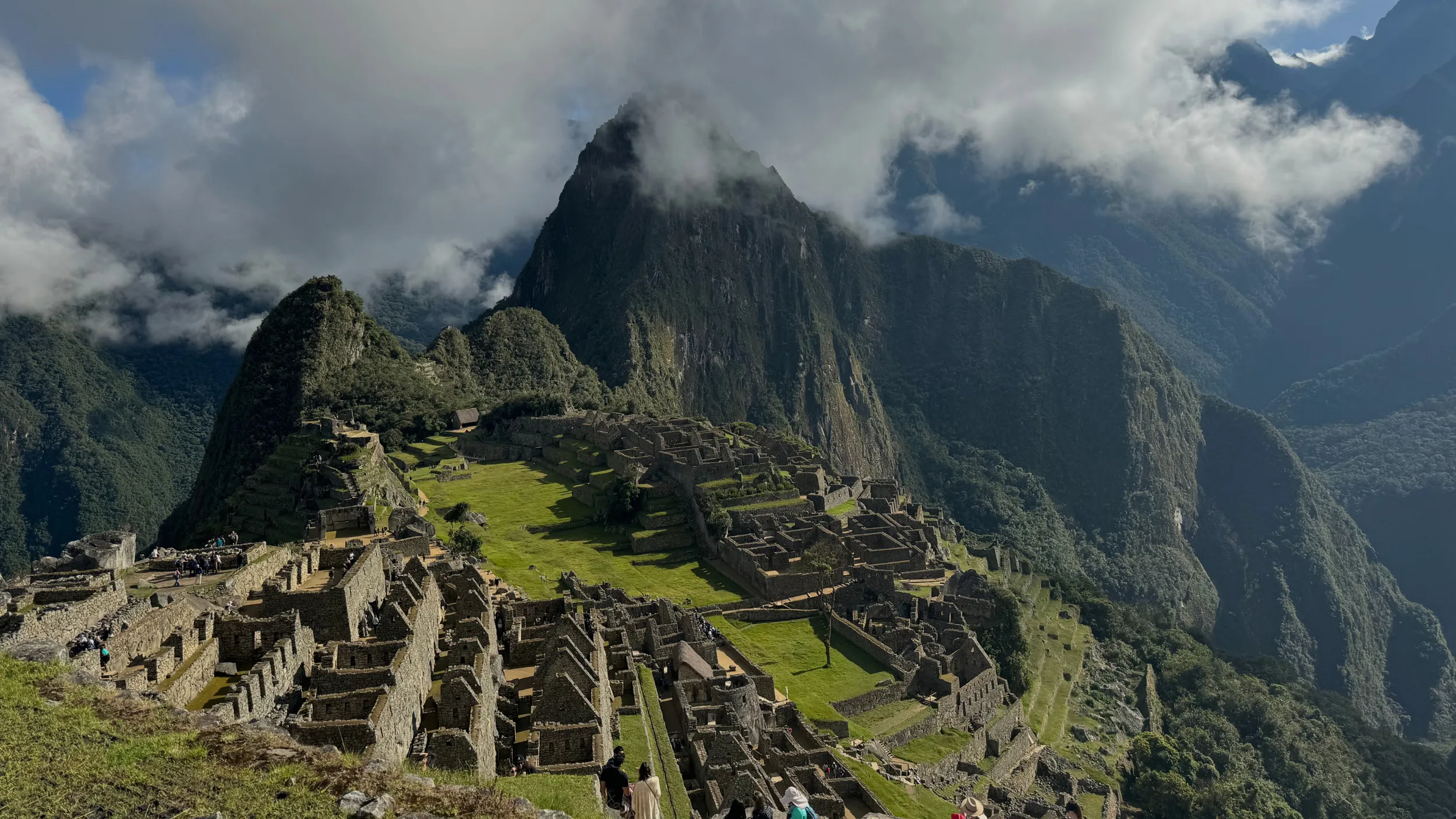
Reaching the Sun Gate marks the first full view of Machu Picchu. The approach is earned—arriving on foot, aligned with the original route. The descent into the site follows the same quiet rhythm.

A guided visit provides context through movement—linking terraces, water channels, and structures within the landscape. After the visit, the descent continues toward Aguas Calientes.

Accommodation is arranged in town. The evening allows rest after several days of sustained movement.

Details
• Difficulty: Moderate
• Maximum altitude: 2700 m
• Walking time: 5–6 hrs
• Walking distance: 8 km
• Accommodation: Hotel

The final day begins early, returning to Machu Picchu for a second visit. Morning light reveals the site differently—clearer, quieter, and more defined.

The guided walk focuses on deeper understanding of the site’s structure and its relationship with the surrounding mountains. Afterward, there is time to move independently, without a fixed pace.

Return begins with the descent to Aguas Calientes, followed by train to Ollantaytambo and road back to Cusco. The transition reverses the route—forest to valley, valley to highland—closing the journey.

Details
• Difficulty: Moderate
• Maximum altitude: 2400 m
• Walking time: 3–4 hrs
• Return: Cusco approx. 6:30 pm

Logistics

  • Hotel pickup and drop-off in Cusco
  • Private transport (Cusco → Tauca / Ollantaytambo → Cusco)
  • Train from Aguas Calientes to Ollantaytambo
  • Bus tickets to Machu Picchu (round trip)
  • Entrance tickets: Huchuy Qosqo, Inca Trail (KM 104), Machu Picchu
  • Duffle bag for personal gear
  • Pre-departure briefing

Professional Support Team

  • Local guide with deep knowledge of terrain and culture
  • Trekking cooks and support team
  • Full camp setup handled throughout
  • All equipment carried in/out under leave-no-trace principles

Experience

  • Guided exploration of Huchuy Qosqo
  • Short Inca Trail (KM 104) to Machu Picchu
  • Two visits to Machu Picchu (arrival + guided second visit)
  • Continuous interaction with landscapes and local routes
  • Wake-up tea and afternoon tea
  • Daily trail snacks

Accommodation

  • 2 nights in Andean Expedition Camps (temporary setup)
  • 1 night hotel in Aguas Calientes

Food

  • 4 breakfasts
  • 3 lunches prepared along the route
  • 2 dinners at camp
  • Meals adapted to dietary needs

Safety

  • First-aid kit and oxygen
  • Continuous terrain and group monitoring

Some elements remain flexible, allowing each traveler to adapt the journey according to personal needs and preferences.

Travel Insurance

  • Strongly recommended, especially for high-altitude trekking

Personal Expenses

  • Additional snacks, drinks, or local products along the route

Additional Snacks or Beverages

  • Any extra items outside the planned meals

Tips for the Team

  • All team members receive fair and consistent payment
  • Tips are optional, but remain a direct way to recognize the work of guides, cooks, and muleteers

Trip Info

  • Andean Expedition Camps and Hotel
  • Cusco
  • Cusco
  • Local guide with deep knowledge of terrain and culture
  • Hotel pickup and drop-off in Cusco
  • 4,200 m / 13,779 ft
  • 4 breakfasts, 3 lunches, 2 dinners

What to Bring

Essentials

  • Passport (student ID if applicable)
  • Cash in Peruvian soles
  • Personal medication

Clothing (Layer System)

  • Waterproof jacket
  • Warm layer for evenings
  • Trekking pants

Footwear

  • Hiking boots (well broken-in)

Protection

  • Hat and gloves
  • Sunglasses
  • Sunscreen and lip balm
  • Insect repellent (important in lower forest sections)

Personal Gear

  • Daypack (20–30L)
  • Water (minimum 2 liters recommended)
  • Headlamp or flashlight

Optional

  • Trekking poles
  • Personal snacks
  • Power bank

Request Your Date & Join a Group

To ensure the best experience and keep our trips personal, you can submit a non-binding request for your preferred date here. As soon as enough travelers join, we will confirm your trip and get everything ready for your adventure.


Related trips you might interested in

1

Food Experience

Meals are prepared in the field using fresh, natural ingredients sourced from the Sacred Valley and nearby communities. There is no reliance on processed or fast food—everything is based on vegetables and locally sourced meats, adapted to the conditions of the trek. At this altitude, food supports movement and recovery, but it also reflects the environment: simple, warm, and aligned with the rhythm of the mountains.


2

Safety Approach

Preparation begins before departure with a detailed briefing, where participants can ask questions and understand route conditions, climate, and physical demands.

Guides continuously assess terrain, weather, and group condition. Decisions are made in real time—especially in canyon sections where heat and exposure vary significantly.

The route is managed through awareness, not rigid timing.


3

Philosophy

Presence is light.

Understanding comes through walking—
not through access, but through crossing.